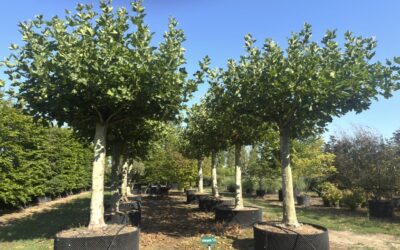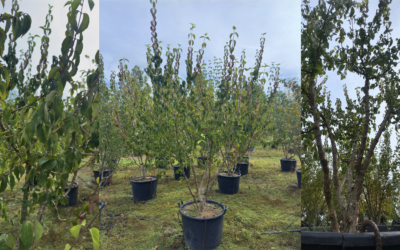
The terms cloud hedge, hedge plants, cloud hedging, and osmanthus are popping up more and more often in conversations about garden design, and for good reason. While neat hedges dominated the streetscape for years, we are now seeing a clear shift toward more natural forms. The cloud hedge has become a striking yet soothing feature in both urban gardens and rural yards.
The Rise of the Cloud Hedge in the Netherlands
A Japanese influence adapted to European gardens
The cloud hedge has its origins in Japanese garden design, where balance, tranquility, and organic forms are central. In the Netherlands, this philosophy translates into a more playful approach to pruning. Instead of straight lines, hedge plants are given a wavy structure. This aligns with the growing desire for gardens that are not only functional but also aesthetically pleasing and soothing.
Cloud hedging, a term you’re seeing more and more often, describes exactly the same principle. By trimming hedge plants into rounded shapes, you create a sort of green cloud cover. The effect is less formal, but certainly no less well-groomed.
Why hedge plants change their function
From a property boundary to a focal point
Traditionally, hedge plants were mainly used as barriers. They provided privacy and structure, but rarely played a significant aesthetic role. With the rise of the cloud hedge, that perception is changing. Hedge plants are increasingly being used as a visual element that adds character to the garden.
You can see this reflected in various applications
- as a soft boundary that looks less imposing
- as a decorative backdrop for flower beds
- as individual design elements in a modern garden
A hedge of clouds makes it possible to create a completely different look using the same plant species.
The role of osmanthus in cloud hedging
A versatile and reliable choice
In the world of hedge plants, the Osmanthus and particularly the Osmanthus burkwoodii plays a prominent role. This evergreen shrub combines sturdiness with a refined appearance, making it particularly well-suited for a cloud hedge.
What sets this plant apart is its combination of characteristics
- The leaves stay green all year round
- The growth is compact and easy to manage
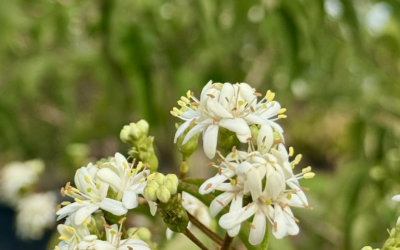
- The flowers in spring give off a strikingly pleasant scent
As a result, the osmanthus is often seen as a worthy alternative to the traditional boxwood, which has been under pressure in recent years due to diseases and pests.
Would you like to learn more about Osmanthus? Click HERE!
Practical in terms of maintenance and design
For those interested in creating a cloud hedge, choosing the right hedge plants is essential. The osmanthus offers clear advantages in this regard. Thanks to its dense branching, it can be shaped relatively easily into the characteristic rounded forms of a cloud hedge.
In addition, it requires less intensive maintenance than many other hedge plants. One or two prunings a year are usually enough to maintain the desired shape.
How to build a cloud hedge
Patience as the most important factor
A hedge of clouds doesn’t form in a single season. It’s a process in which you build up the structure step by step. That requires patience, but ultimately yields a unique result.
The first step is to plant young hedge plants in a straight line. Then, let the plants grow sufficiently before you start shaping the first arches.
The technology behind cloud hedging
Pruning a cloud hedge is fundamentally different from traditional hedge pruning. You’re not working toward a flat, even surface, but rather toward rounded shapes.
Key points to consider are
- Always prune with sharp tools
- Work in small steps to gradually build up the shape
- Take a step back and look at the big picture from time to time
This approach creates a natural-looking whole in which each “cloud” has its own shape, yet remains part of a single line.
Caring for topiary hedges
Less strict, but no less care
Although a cloud hedge looks less dense than a traditional hedge, that doesn’t mean it requires less maintenance. On the contrary, maintaining its rounded shape requires precision.
Regular pruning ensures that the hedge plants remain dense. It is also important to fertilize the plants properly and water them sufficiently, especially in the first few years after planting.
Seasonal Factors and Growth
The growth of hedge plants such as osmanthus is highly dependent on the season. In the spring, you’ll notice a distinct growth spurt, followed by a slower period in the summer. By adjusting your pruning schedule accordingly, you can maintain control over the shape of your cloud hedge.
The aesthetic value of a hedge of cloudberries
A balance of tranquility and vitality
What makes a cloud hedge so appealing is the combination of tranquility and dynamism. Its soft shapes create a relaxed atmosphere, while the variation in height and volume adds movement to the garden.
Cloud hedging is thus part of a broader trend that emphasizes natural forms and biodiversity. Hedge plants are no longer viewed as static elements, but as living structures that change with the seasons.
Suitable for various garden styles
Whether you have a sleek, modern garden or a more traditional design, a cloud hedge can be a valuable addition in either case. The flexibility of hedge plants like osmanthus makes it possible to adapt their shape to the surroundings.
In a minimalist garden, the clouds provide a contrast to the hard lines. In a more informal garden, they actually enhance the natural character.
Critical remarks on cloud hedging
Not something every gardener takes for granted
Although topiary is popular, it isn’t the right choice for everyone. It requires a certain amount of skill and patience to create the right shapes. For beginners, it can be difficult to achieve the desired result right away.
Space is also a factor. In very small gardens, a cloud hedge can quickly become too dominant, making the whole area look cluttered.
Costs and time commitment
The investment in high-quality hedge plants and their maintenance should not be underestimated either. Although osmanthus is relatively low-maintenance, shaping a cloud hedge does require time and attention.
The Future of Hedge Plants in Garden Design
From functionality to experience
The popularity of cloud hedges and cloud hedging shows that hedge plants are taking on a new role in garden design. They are no longer merely functional, but actively contribute to the experience of the outdoor space.
The osmanthus plays an important role in this regard, precisely because it is both practical and aesthetically pleasing. It is likely that this plant will be used even more frequently in Dutch gardens in the coming years.
Conclusion
Cloud hedging is more than just a trend. It’s a new way of thinking about hedge plants and garden design. By combining techniques from Japanese garden art with hardy species such as osmanthus, it creates a form of greenery that is both soothing and dynamic. Cloud hedging thus offers an alternative to the traditional hedge and aligns with the desire to make gardens more personal and natural.
If you're thinking about planting a cloud hedge yourself, it's a good idea to learn more about the right hedge plants and techniques. Profigreen is happy to help you create your dream hedge! Click HERE to contact us!