You’ll find all kinds of trees everywhere, from city parks to backyards, and it’s precisely these different types of trees that largely determine how a landscape looks and feels. Yet many people rarely stop to think about how much influence trees have on their immediate surroundings. They provide shade, improve air quality, and offer habitats for birds and insects. At the same time, different types of trees also set the tone for a garden or street.
Anyone who has a garden or wants to create a green outdoor space will quickly realize that there is a vast selection of tree species to choose from. Some trees grow quickly and provide immediate results, while others grow slowly but add character over the course of decades. Some trees are suitable for small gardens, while others require a lot of space. By understanding the different types of trees available and their characteristics, you can make better choices for your garden or property.
In this article, you’ll learn about the different types of trees commonly found, their characteristics, and how to determine which tree is best suited to your situation.
Why Different Types of Trees Are Important
The role of trees in nature and the living environment
When you look at different types of trees, you don’t just see variations in shape and foliage. Each tree species plays its own role in the ecosystem. Some trees attract bees and butterflies, while others provide shelter for birds or small mammals.
In urban areas, various tree species are becoming increasingly important. They help lower temperatures during hot summers and improve stormwater drainage during heavy rainfall. In addition, various tree species contribute to biodiversity, which is under pressure in many cities.
In private gardens, too, different types of trees can make a big difference. A well-chosen tree can provide privacy, break up the wind, or make a garden appear larger.
Deciduous trees: well-known varieties of trees
Popular trees for gardens and parks
Among the various types of trees, deciduous trees are probably the best-known group. They lose their leaves in the fall and sprout new ones in the spring. This creates a different scene every season.
Popular tree species in this category include:
• oak
• birch
• linden
• maple
The appeal of these different tree species lies in how they reflect the changing seasons. In spring, they display fresh green foliage in summer, a full canopy in fall, warm colors and in winter, a distinctive branch structure.
A maple, for example, grows relatively quickly and provides plenty of shade. A birch, on the other hand, has a lighter, more elegant appearance and works well in smaller gardens. By looking at different types of trees within the deciduous category, you’ll discover that each tree has a different look and function.
Various types of evergreen trees
Structure and privacy all year round
In addition to deciduous trees, there are also various types of trees that remain green all year round. These trees do not lose their needles or leaves all at once, so they provide structure and shelter even in winter.
Common types of trees in this group include:
• pines
• spruces
• yews
• cedars
These different types of trees are often used as windbreaks or natural barriers. In gardens where privacy is important, evergreen trees offer a major advantage.
In addition, many trees in this category are often quite hardy in cold winters, making them well-suited to the Dutch climate.
Wie inspiratie zoekt voor deze categorie kan bijvoorbeeld kijken naar het <a href=”https://profigreen.nl”>assortiment bomen</a> bij Profigreen, waar verschillende soorten bomen beschikbaar zijn voor uiteenlopende toepassingen.
Ornamental trees: various types of decorative trees
Small trees with a big presence
Not every garden has room for large trees. That’s why many people opt for ornamental trees. These are various types of trees that remain relatively compact yet still add a lot of character to a garden.
Well-known tree species in this category include:
• ornamental cherry
• magnolia
• currant tree
• ornamental apple
These different types of trees are particularly striking when they bloom. In the spring, they transform a garden into a sea of flowers. In the fall, some varieties also display beautiful foliage colors.
Ornamental trees are ideal for smaller gardens because they tend to stay narrower and grow to a lower height. Yet they offer the same benefits as larger tree species, such as shade, biodiversity, and a pleasant, green atmosphere.
Different types of trees for small gardens
Making smart choices when space is limited
In many Dutch neighborhoods, gardens are relatively small. However, that doesn’t mean there isn’t room for different types of trees. It mainly comes down to making the right choice.
Suitable tree varieties for small gardens often have one or more of the following characteristics:
• compact crown
• slow growth
• limited height
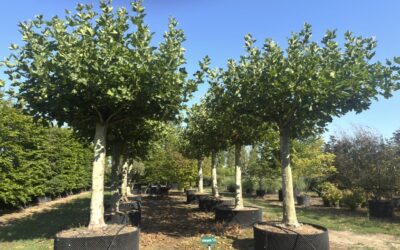
Examples of tree species that work well in smaller gardens include the globe acacia, the roof plane tree, and the Japanese maple.
By carefully selecting from different tree species, you can prevent a tree from growing too large later on. This is important because a tree planted in the wrong spot may ultimately require more maintenance and pruning.
Climate and soil determine which tree species are suitable
The right tree in the right place
When choosing among different types of trees, soil type plays an important role. Some trees grow best in sandy soil, while others thrive in clay or moist soil.
The climate also influences which tree species are suitable. In the Netherlands, trees are increasingly facing longer periods of drought. As a result, municipalities and landscapers are increasingly opting for tree species that are more resistant to heat and drought.
Examples of hardy tree species include field maple, hornbeam, and sweetgum. These species combine an attractive appearance with relatively high resistance to changing weather conditions.
By taking soil, space, and climate into account when choosing different types of trees, you increase the likelihood that a tree will continue to grow healthy and strong.
Biodiversity and different types of trees
Bring more life to your garden
When you combine different types of trees in a garden or landscape, it promotes greater biodiversity. This is because each tree attracts different insects and birds.
For example, various types of trees, such as oaks, provide food for hundreds of insect species. Fruit trees attract pollinators like bees and bumblebees. And dense stands of various tree species provide birds with a safe place to nest.
By deliberately planting a variety of different tree species, you can create a vibrant garden. This not only makes an outdoor space more beautiful, but also more ecologically valuable.
In addition, a mix of different tree species creates a more natural-looking landscape. Variations in height, foliage, and flowering patterns give a garden depth and character.
How to choose from different types of trees
Practical questions you can ask yourself
Choosing from so many different types of trees can be overwhelming. However, it becomes easier if you ask yourself a few practical questions.
For example:
• How much space is available?
• How much sun does the spot get?
• Do you prefer shade or sunlight?
By answering these questions, you can narrow down your search to the types of trees that are best suited to your situation.
Maintenance is also a factor. Some tree species require regular pruning, while others are virtually low-maintenance. By carefully considering your options in advance, you can avoid surprises down the road.
Conclusion
Different types of trees form the foundation of any green space. Whether it’s a city park, a rural garden, or a small backyard, the selection of tree species determines the character, biodiversity, and comfort of a place.
By learning about different types of trees, you’ll discover that each species has its own unique qualities. Some provide shade, others offer flowers or vibrant fall colors. Still others primarily provide structure and privacy.
By carefully selecting from a variety of tree species, you can create a garden that is not only beautiful but also sustainable and future-proof. It can be helpful to thoroughly review the available options and seek advice. Profigreen can assist you in finding tree species that suit your garden, property, and preferences.