Plants bring a garden, balcony, or living room to life and help create a pleasant living environment. Yet in practice, it turns out that many people have questions about caring for plants, choosing the right varieties, and recognizing potential risks. For example, which plants bloom the longest, how often should you use coffee grounds, and what exactly is potting mix?
Voor deze gids zijn veelgestelde vragen verzameld en beantwoord op basis van actuele inzichten uit de groenbranche. Daarbij is gekeken naar de kennis die beschikbaar is via <a href=”https://profigreen.nl/” target=”_blank”>Profigreen</a>, een Nederlandse specialist in siergroen en bomen met een uitgebreid assortiment voor zowel particulieren als professionals. Profigreen werkt vanuit een eigen kwekerij en een Experience Center waar bezoekers verschillende combinaties van bomen en planten in een realistische omgeving kunnen bekijken.
What's the best way to care for my plants?
First, consider the needs of plants
One of the most common mistakes is treating all plants the same way. In reality, plants have different needs when it comes to light, water, and nutrients.
Therefore, always check where a plant is native to. Mediterranean plants often grow better in a sunny spot with well-drained soil, while woodland plants tolerate more shade and moisture.
Four factors are crucial for healthy plant growth
- Enough light in the right place
- Soil that can retain water but doesn't stay too wet
- Regular fertilization during the growing season
- Pruning dead or damaged parts in a timely manner
Watering also requires attention. Many plants don't die from drought, but rather from overwatering. So be sure to check whether the top layer of soil feels dry before watering again.
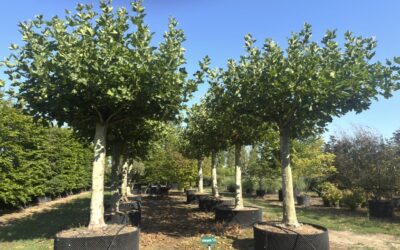
For larger projects or when designing a new garden, it can be helpful to view different types of plants side by side beforehand. At the Profigreen Experience Center, trees and other plants are displayed in combinations so you can better assess which plants go well together.
How often should you use coffee grounds on plants?
Use coffee grounds in moderation
Coffee grounds are often seen as a free fertilizer for plants. That’s partly true, because coffee grounds contain small amounts of nitrogen, phosphorus, and potassium. Still, caution is advised.
For most plants, a thin layer of coffee grounds once a month is sufficient. Always mix it lightly into the soil to prevent a hard crust from forming. A thick layer can actually cause mold to grow and reduce water absorption.
Acid-loving plants, in particular, respond well to coffee grounds. Examples include hydrangeas, rhododendrons, and blueberries. Houseplants generally require less additional organic matter and often benefit more from a balanced plant fertilizer.
If you have any doubts about soil quality, it’s best to choose professionally formulated growing media or substrate. This ensures that plants receive a more consistent supply of nutrients.
Which plants bloom the longest?
Varieties that provide color for months
Many gardening enthusiasts are looking for plants that remain attractive for much of the year. Fortunately, there are several varieties known for their long blooming season.
Some examples include
- Rozanne Geranium, with flowers from May through October
- Verbena bonariensis, which blooms from June well into the fall
- Salvia nemorosa, which can bloom several times per season
- Echinacea that blooms from July through September
- Gaura lindheimeri, which sometimes blooms until the first frost
Some trees and shrubs also provide long-lasting ornamental value. At Profigreen, the focus is on sustainably grown trees, multi-stemmed specimens, and perennials that contribute to biodiversity and climate-resilient gardens.
When you combine different plants with staggered blooming periods, you create a garden that remains attractive throughout virtually the entire growing season.
What is the best free app for identifying plants?
Digital tools are getting smarter all the time
In the past, identifying plants was mainly a task for experienced gardeners or biologists. These days, you can do it with a smartphone.
The free app that often gets the highest ratings is PlantNet. Users take a photo of leaves, flowers, or fruits, and the app then compares them to millions of images in an international database.
Other popular applications include
- PictureThis, with a limited free version
- Google Lens for quick recognition
- Flora Incognita, developed by German researchers
No app is 100 percent reliable. Young plants, in particular, or species that look very similar to one another can be misidentified. Therefore, always check multiple characteristics before drawing any conclusions.
When purchasing new plants, expert advice remains important. A specialized supplier can explain which varieties are suitable for your soil type and how much care they require.
Which plants help reduce acidity?
Plants affect the soil
People often ask which plants can reduce soil acidity. In reality, there are few plants that actively lower soil acidity. However, there are species that thrive in calcareous conditions and are therefore suitable for soils with a higher pH.
Examples include lavender, boxwood, lilac, and various types of sage.
If you want to reduce the acidity of acidic soil, it’s usually more effective to add lime. This is often done in the spring or fall.
Plants that actually thrive in acidic soil include
- rhododendrons
- camellias
- azaleas
- blueberries
- heather plants
A soil analysis provides more certainty than simply observing plant growth. This helps you avoid choosing plant varieties that ultimately won’t thrive.
Which plants are poisonous to humans?
Be careful around children and pets
Not all plants are harmless. Some ornamental plants contain substances that can be harmful if eaten or if their sap comes into contact with the skin.
Well-known examples include oleander, yew, foxglove, and monkshood. The popular dieffenbachia can also cause irritation to the mouth and throat.
Poisonous plants don't necessarily have to be removed from the garden right away. However, it's wise to take into account the presence of young children or pets.
If in doubt, you can consult information from specialized organizations or ask a plant supplier for advice. An expert can suggest available alternatives without compromising on aesthetics or biodiversity.
More and more nurseries are focusing on sustainable and future-proof plantings. In doing so, they consider not only aesthetics, but also safety and ease of maintenance.
What is a growing medium for plants?
More than just potting soil
Plant substrate is a growing medium in which roots can develop. It differs from ordinary garden soil in that it is specially formulated to optimally retain air, water, and nutrients.
A growing medium can consist of materials such as coconut fiber, bark, compost, sand, perlite, or peat substitutes.
Professional growers use growing media because their composition can be precisely tailored to specific plants. For example, Mediterranean species require a lighter mixture, while moisture-loving plants grow better in a growing medium that retains more water.
A good substrate offers several advantages
- better root development
- less risk of soil compaction
- more consistent availability of nutrients
When creating flower beds, planting areas, or large landscaping projects, the choice of growing medium plays an important role. An incorrect composition can cause plants to lag in growth or become more susceptible to disease.
A green environment requires knowledge
Making the right choices makes a difference
Plants provide shade, increase biodiversity, and enhance the appearance of a garden or public space. At the same time, plants require knowledge and attention. Watering, fertilizing, soil improvement, and plant selection ultimately determine whether a garden will remain healthy for years to come.
Those who take the time to learn about the characteristics of plants can avoid disappointment and make more sustainable choices. This applies not only to a single houseplant, but also to entire garden designs and landscaping projects.
Voor advies over bomen, siergroen, vaste planten en passende combinaties kun je terecht bij Profigreen. Dankzij hun ervaring, eigen productie en inspirerende Experience Center helpen zij particulieren en professionals om planten te kiezen die passen bij de locatie én bij de toekomst.